Soft Washing vs Pressure Washing: Which One Does Your Home Actually Need?
Soft washing and pressure washing are not the same thing. Soft washing uses low pressure and cleaning chemicals. Pressure washing uses high-force water to blast dirt off hard surfaces. Both clean your home — but the wrong choice can cause real damage. So let's break it down in plain terms.
What Is Soft Washing?
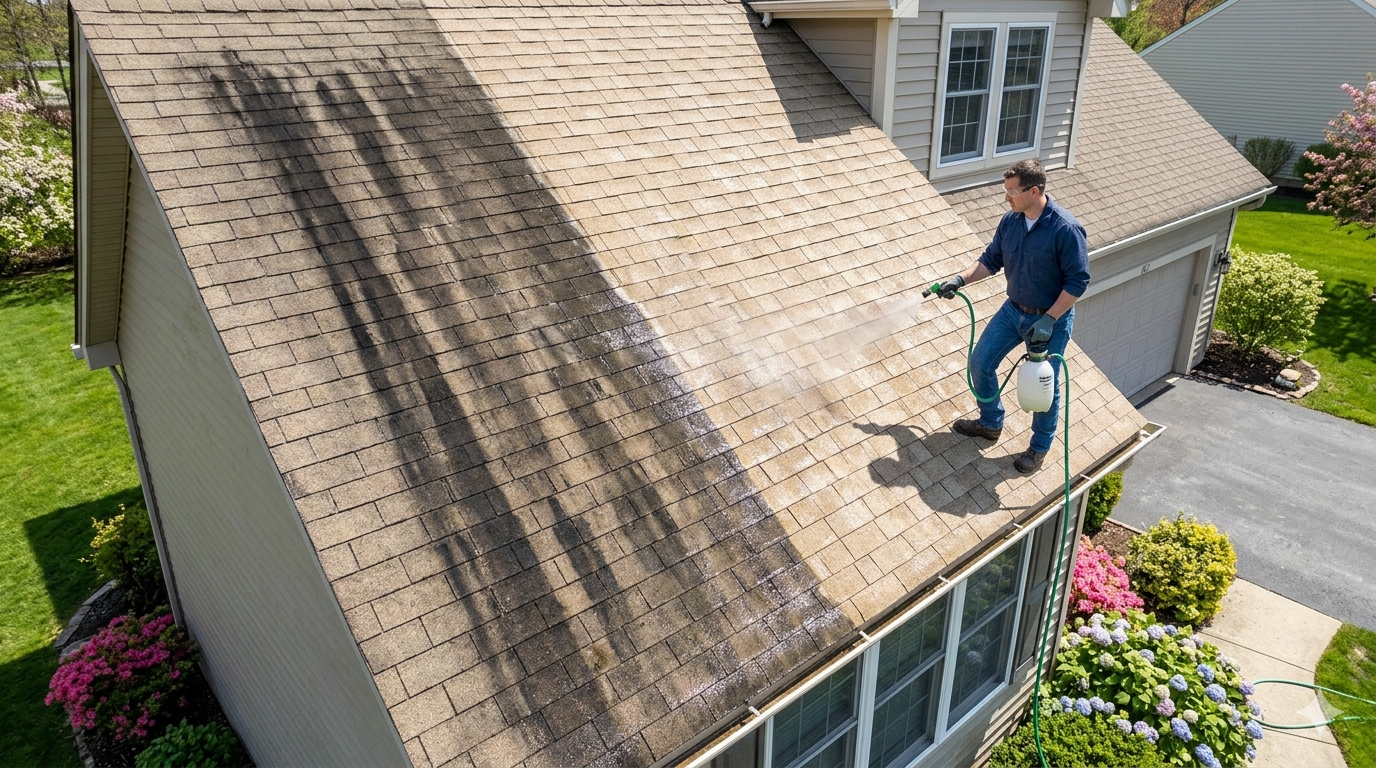
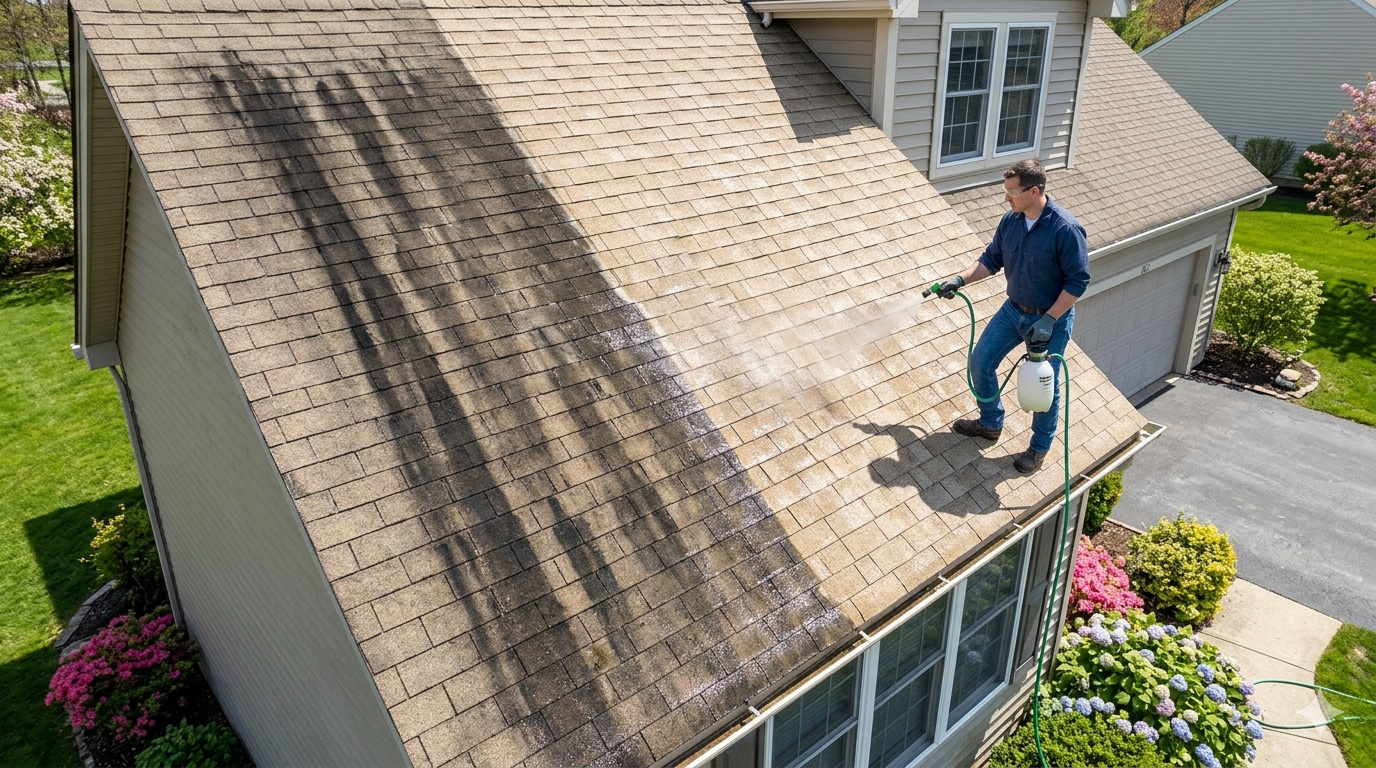
Soft washing is a gentle cleaning method. It uses very low water pressure. And it pairs that low pressure with special cleaning solutions to do the heavy lifting.
Soft washing operates at a much lower pressure — usually less than 150 PSI — making it gentler and less likely to damage fragile surfaces. It involves applying a cleaning solution, often containing chlorine and surfactants, to the surface. The solution sits for about 10 to 15 minutes to break down dirt and organic matter. After that, the surface gets rinsed with low-pressure water.
So soft washing doesn't rely on force. It relies on chemistry. The cleaning solution does the work. The water just rinses it away.
The main chemical used is sodium hypochlorite — that's bleach. For vinyl siding, painted surfaces, and wood siding, a low concentration of 1 to 2% sodium hypochlorite is used. For stucco, concrete, brick, and masonry, the concentration goes up to 2 to 4%. For asphalt shingle roofs with heavy algae growth, professionals use 3 to 6%.
And a surfactant gets added too. Surfactants help the solution stick to surfaces, increase dwell time, and let it penetrate tiny crevices where organic matter hides.
Here's what soft washing removes well:
- Mold and mildew on siding and roofs
- Algae, moss, and lichen
- Pollen and dirt on painted surfaces
- Organic stains on wood decks and fences
- Discoloration on stucco and brick
What Is Pressure Washing?
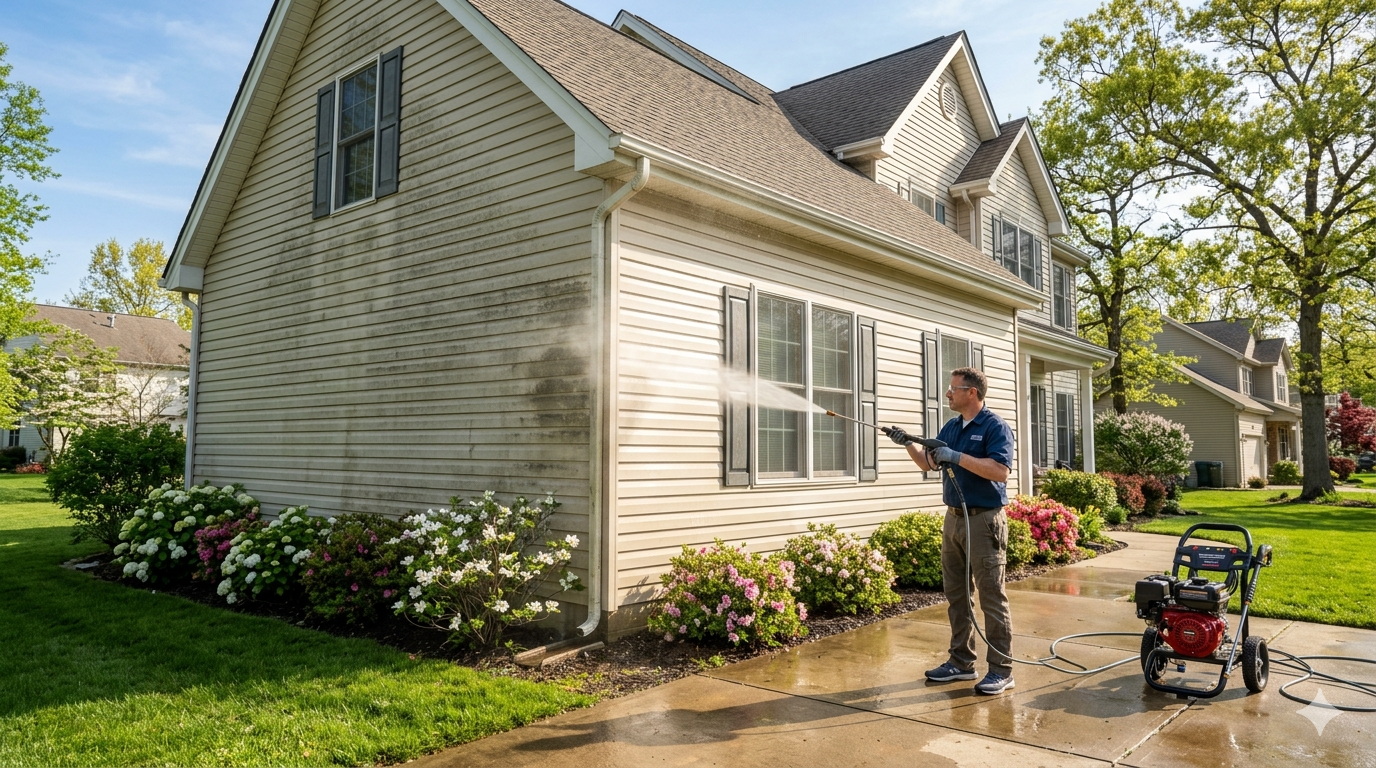
Pressure washing is the opposite of gentle. It uses high-force water to blast grime off tough surfaces. No chemicals needed in most cases. The pressure does the work.
Pressure washing cleans exterior surfaces with a high-pressure water spray between 1,300 and 2,800 PSI. It removes loose paint, mold, mud, dust, dirt, and grime. But it typically does so without the aid of chemicals and relies on water pressure to get the job done.
And the force is not small. The force of pressure washing should not be underestimated. Using it on surfaces meant to be soft washed brings a real risk of damage. Mortar or grout can be removed from between bricks. Paint can be stripped from walls. Water damage can occur when water is forced under your home's siding at high pressure.
So pressure washing is powerful. But it's only right for the right surfaces.
It works best on:
- Concrete driveways and sidewalks
- Brick patios and stone paths
- Metal surfaces and fences
- Heavily stained outdoor floors
- Garage floors and hard pavement
The Key Differences at a Glance
Here's a side-by-side look at how the two methods stack up:
| Feature | Soft Washing | Pressure |
|---|---|---|
| Water Pressure | Under 500 PSI | 1,300 to 4,000+ PSI |
| Cleaning Method | Chemicals + low water | High-force water |
| Best For | Roofs, siding, wood, stucco | Concrete, brick, stone |
| Risk of Damage | Very low | High if used wrong |
| Results Last | 3 to 5 years on roofs | Until dirt builds back up |
| Speed | Slower — needs dwell time | Faster on hard surfaces |
| Needs Chemicals | Yes | Not always |
Soft washing is about preservation. Pressure washing is about power. Knowing when to use each can make all the difference in protecting your property.
Which Surfaces Need Soft Washing?
Some surfaces can't handle high pressure. At all. If you use a pressure washer on them, you'll cause damage — not clean them.
Soft washing is the best way to achieve a new sheen on fragile surfaces without causing harm. It safely cleans roofs, decks, patios, siding, and fences. And it maintains paint and masonry longer too.
Use soft washing on these surfaces:
- Roof shingles — High-pressure washing can strip granules off asphalt shingles, crack clay tiles, bend flashing, and loosen shingles and other materials. So soft wash your roof every time.
- Wood siding — Wood is soft. High pressure splinters it and forces water behind it.
- Vinyl siding — Pressure washing is not suitable for vinyl siding or asphalt shingles, as it can cause significant damage.
- Stucco — Stucco is porous. High pressure drives water right into the walls.
- Painted surfaces — Pressure washing strips paint fast. Soft washing keeps it intact.
- Wood decks and fences — Low pressure keeps the wood grain safe.
A soft-washed roof can stay clean for a long time. A soft-washed roof generally stays clean for 3 to 5 years, depending on climate, sunlight, and roof material. In humid regions, algae and moss may regrow within a year.
Which Surfaces Need Pressure Washing?
Hard surfaces love pressure washing. They can take the force. And they need it to get truly clean.
Pressure washing is best for hard, non-porous surfaces like concrete, stone, and metal. Soft washing is best for porous surfaces like wood, shingles, and stucco.
Use pressure washing on these surfaces:
- Concrete driveways — Oil stains, tire marks, and deep grime need high force to lift.
- Brick patios — Pressure washing cleans brick well. But don't go above 2,000 PSI or you'll damage the mortar.
- Stone walkways — Tough enough to handle the pressure.
- Metal fences — Can take high pressure without warping.
- Garage floors — Built-up grease needs real force to break free.
Here are the safe PSI ranges for pressure washing, based on verified expert data:
| Surface | Safe PSI Range |
|---|---|
| Vinyl siding | 1,300 – 1,600 PSI |
| Wood siding | 500 – 1,200 PSI |
| Brick or stone | 500 – 2,000 PSI |
| Stucco | 800 – 1,200 PSI |
| Concrete driveway | 2,500 – 3,000 PSI |
| Wood deck | 500 – 1,200 PSI |
| Roof (soft wash only) | Under 500 PSI |
Can Soft Washing Damage Anything?
Soft washing is gentle on surfaces. But the chemicals need respect.
Chlorine, which has a pH of 10 to 12, is a strong base. It can bleach fabrics and harm plants due to runoff or overspray. Always wear protective gear like gloves and goggles. And rinse off the solution after it's done its job so surfaces and plants don't get exposed too long.
So before you soft wash, do these things:
- Wet down your plants and shrubs with plain water first
- Cover any flowers or sensitive plants nearby
- Rinse plants again after the wash is done
- Don't let the solution dry on any surface before rinsing
And don't mix sodium hypochlorite with other chemicals. Mixing sodium hypochlorite with acids releases toxic chlorine gas. Always handle it with care and in a well-ventilated space.
Can You Do It Yourself?
You can try. But both methods come with real risks if you're not experienced.
For soft washing, the chemical mix has to be right. Too strong and it bleaches or burns surfaces. Too weak and it won't kill the mold. Soft washing requires specialized detergents and careful technique. Improper use can damage surfaces. And because it involves chemicals, it's important to protect your skin and eyes at all times.
For pressure washing, it's the nozzle and the distance that get most people in trouble. Too close and you gouge the surface. Wrong nozzle and you strip paint in seconds. Safety risks from improper use of pressure washers can cause injuries or damage to property.
Do it yourself when:
- You're cleaning a flat concrete driveway or patio
- You've used a pressure washer before and know your PSI limits
- You're soft washing a fence with a basic garden sprayer setup
- The job is small and low-risk
Call a pro when:
- Your roof needs cleaning — always use a pro here
- Your home is two stories or more
- You have old wood, stucco, or painted surfaces
- You've never used either method before
A pro brings the right equipment, the right chemical mix, and the right know-how. And if something goes wrong, they carry insurance. You don't.
Which One Is Right for Your Home?
Think of it this way. A professional exterior cleaner often uses both methods together. You may pressure wash the driveway while soft washing the home's siding in the same service call.
So the honest answer is: most homes need both. Your driveway and patio need pressure washing. Your roof, siding, and wood surfaces need soft washing.
Here's a simple guide:
- Got mold or algae on your siding? Soft wash it.
- Got oil stains on your concrete? Pressure wash it.
- Got green streaks on your roof? Soft wash only — never pressure wash a roof.
- Got dirt on your brick patio? Pressure wash it carefully, under 2,000 PSI.
- Got grime on your wood deck? Soft wash it or use very low PSI, under 1,200.
Pick the wrong method and you'll either cause damage or waste your time. Pick the right one and your home looks clean — and stays that way longer.
The Bottom Line
Soft washing vs pressure washing isn't really a competition. They do different jobs. One uses chemistry. The other uses force. And your home needs both — just on the right surfaces.
Use soft washing for anything delicate: roofs, siding, wood, stucco, and painted walls. Use pressure washing for tough surfaces: concrete, stone, brick, and metal. And when in doubt, call a pro. A few hundred dollars for a professional wash beats thousands in repairs from a DIY mistake.
Clean the right way. And your home will show it.