How to Remove Black Streaks from Roof: A Real Homeowner's Guide
Those black streaks on your roof are not dirt. And they're not moldy. They're actually a type of blue-green algae called Gloeocapsa magma. This resilient organism thrives in warm, moist conditions and feeds on the limestone filler used in many asphalt shingles.
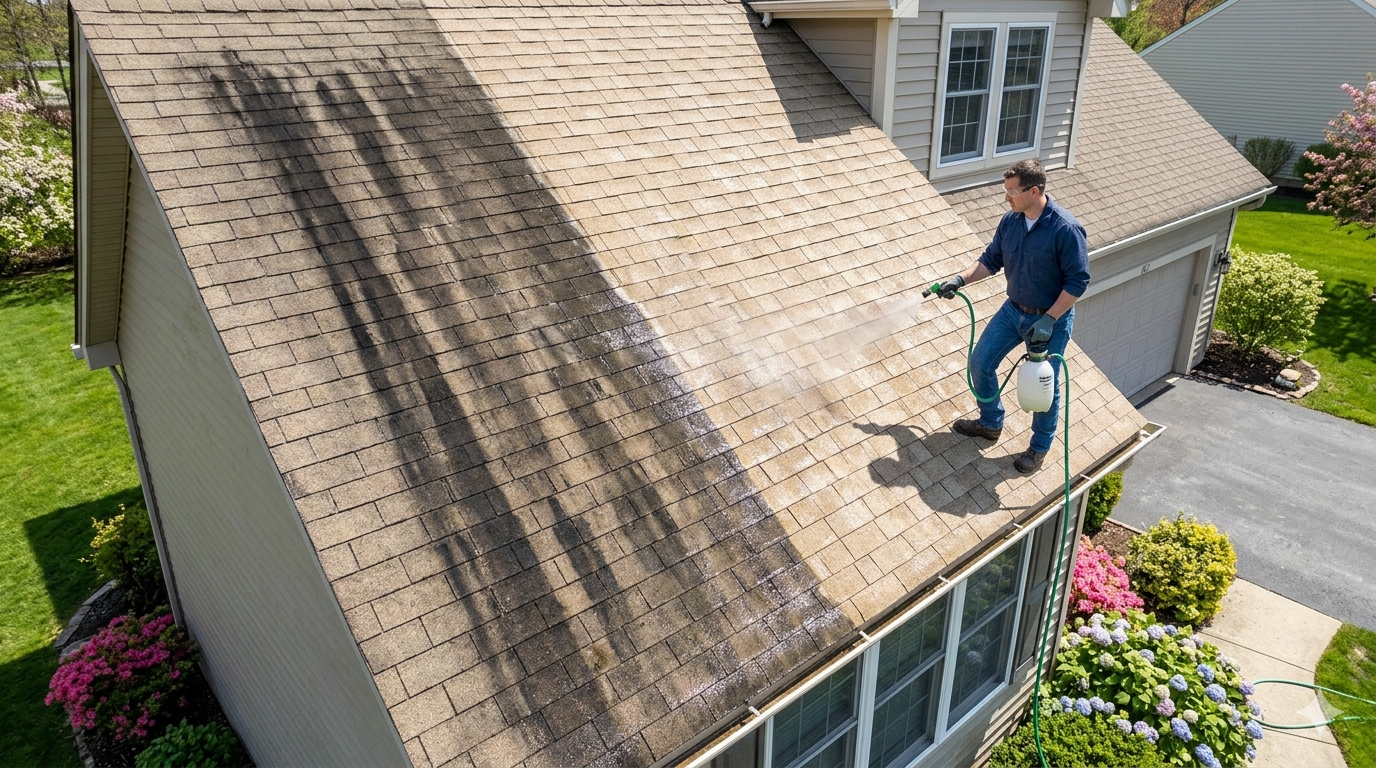
So how do you remove black streaks from a roof? You use a 50/50 mix of household bleach and water. You spray it on. You let it sit for 15 to 20 minutes. Then you rinse with low pressure water. That's it. But there's a right way and a wrong way to do this. Keep reading and you'll get the full picture.
What Are Those Black Streaks, Really?
A lot of people see those dark lines and think their roof is failing. It's not. But you still want to deal with it fast.
Often mistaken as mold or mildew, the black discoloration and streaks visible on many roofs across the United States and Canada are actually algae. The algae can form where moisture tends to dwell on roof surfaces. Coastal or humid climates create the most conducive conditions for algae growth.
Here's how it works. As the algae colony grows larger, it gets heavier. Gravity pulls it downward across the shingles. That downward pull is what creates the "streak" look. So the black streaks on your roof are actually colonies of bacteria spreading across the shingles.
And they spread fast. Algae spores are airborne. They can be carried by wind and spread quickly from rooftop to rooftop in a neighborhood.
Here's what makes your roof a target:
- North-facing or shaded areas that stay damp
- Overhanging tree branches that block sunlight
- Gutters that drain directly onto the roof
- Humid or coastal climates
- Asphalt shingles made with limestone filler — which the algae eats
In coastal and damp, humid climates on roofs without algae protection, shingles can show black streaks in as little as three years.
Does It Actually Damage Your Roof?
This is the part most people get wrong. Black streaks don't cause immediate structural damage. But leaving them alone is still a bad idea.
While black streaks on asphalt shingle roofs won't cause damage immediately, they can result in your roof aging prematurely. The algae will grow worse every year it's allowed to stay, growing larger and more noticeable, while also trapping moisture and causing premature aging on your shingles.
And there's a bigger risk if moss joins the algae. Black streaks alone don't mean your roof needs to be replaced. But it's a different story when you see moss growing alongside algae. Widespread moss is a huge sign it's time to consider replacing your roof.
Shingles with excessive black streaks can fail 5 to 10 years sooner than the same shingles in the same conditions without black streaks.
So don't ignore it. Clean it early. It's much cheaper than a new roof.
The #1 Mistake Homeowners Make
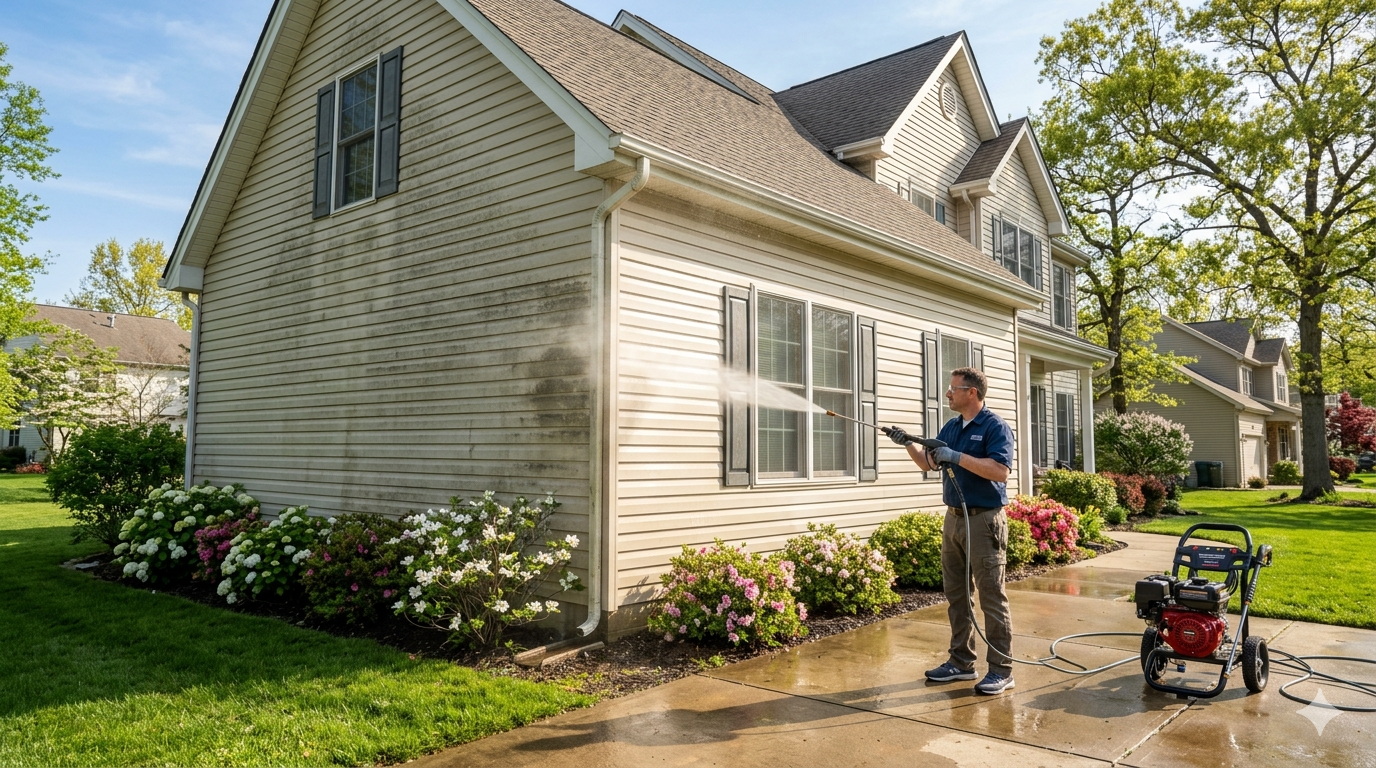
You see the streaks. Your first thought is to grab the pressure washer. Don't do it.
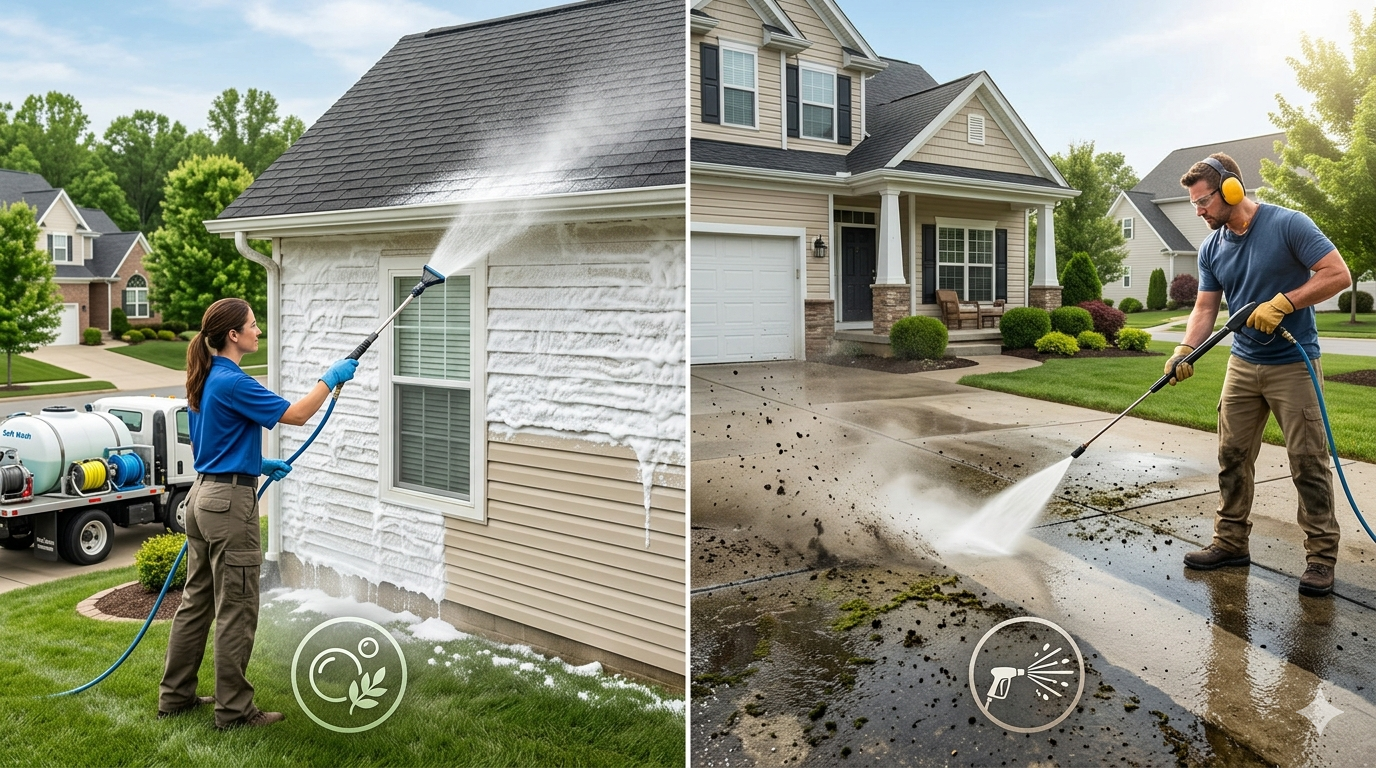
The Asphalt Roofing Manufacturers Association (ARMA) is very clear: do NOT use a power washer or any type of brush or broom to clean algae from the roof surface. High-pressure washing systems are likely to damage asphalt roofing and should not be used to remove algae or for any other purpose.
Pressure washing actually damages asphalt shingles — it blows their protective granules off and voids any warranties.
So skip the pressure washer. Use the method that the experts and shingle makers actually recommend. That's a bleach and water solution applied with a low-pressure sprayer.
How to Remove Black Streaks from Roof: Step-by-Step
This is the method approved by ARMA — the Asphalt Roofing Manufacturers Association. It works. And it doesn't wreck your shingles.
What you'll need:
- Household liquid chlorine bleach
- Water
- A pump garden sprayer
- Rubber gloves
- Safety goggles
- Old clothes you don't mind ruining
- Slip-resistant shoes
- A garden hose for rinsing
Step 1 — Mix your solution.
The most effective method of cleaning algae and moss from a roof is with a 50:50 mix of laundry strength liquid chlorine bleach and water. That's equal parts bleach and water. No need to go stronger than that. A stronger mix can discolor your shingles just like it bleaches clothing.
Step 2 — Protect your plants first.
Bleach can harm or kill plants in your landscape. Before and after applying bleach, wet down any grass, shrubs, or other plants where runoff might occur. For extra protection, cover bushes with plastic after wetting them down.
Step 3 — Pick the right day.
For best results, pick a cloudy day to clean the roof. On hotter, sunnier days, the cleaner will evaporate too quickly. And never work on a wet or slippery roof. Check the weather first.
Step 4 — Apply the solution.
Spray the bleach mix onto the streaked areas. Work from the top down. Don't scrub. Don't pressure wash.
Apply with a sprayer and allow the solution to dwell on the roof surface for 15 to 20 minutes, then rinse thoroughly with low pressure water. Extended dwell times may be needed — but avoid letting the solution dry completely, as this may prevent a full rinse.
Step 5 — Rinse carefully.
Use your garden hose on a gentle setting. Take care to thoroughly flush the roof and the greenery around the home — the grass, bushes, and shrubs — after rinsing the roof.
Step 6 — Wait for results.
Don't expect instant clean shingles. Algae will disappear and wash away with subsequent rains. Moss will loosen over time and may be removed with a leaf blower. In severe cases, it may take more than one bleach treatment.
Here's a quick summary of the cleaning process:
| Step | What to Do |
|---|---|
| Mix | 50/50 bleach and water in a pump sprayer |
| Protect | Wet plants before and after. Cover with plastic |
| Apply | Spray top to bottom. No scrubbing. No pressure washer |
| Dwell time | Let it sit 15 to 20 minutes. Don't let it dry |
| Rinse | Low pressure garden hose from top to bottom |
| Repeat | Severe cases may need a second treatment |
Is It Safe to Do This Yourself?
You can do it yourself. But don't take it lightly. Roofs are dangerous.
ARMA recommends that only trained professionals engage in roof cleaning activity. If you choose to do so yourself, exercise extreme care, comply with all government safety regulations, and follow all safety work practices.
And here's something most guides skip — it's never a good idea to work alone on a roof. A second person can hold a ladder steady, watch for safety hazards, and call for help if anything goes wrong.
Do it yourself if:
- Your roof has a low pitch and easy access
- You have proper ladder gear and slip-resistant shoes
- You've worked on your roof before
- Someone is with you the whole time
Call a pro if:
- Your roof is steep or two stories high
- The algae covers a large area of the roof
- You don't have the right safety gear
- You're not comfortable with heights at all
A professional roof cleaning costs roughly $150 to $400 for most homes. That's a lot cheaper than a new roof — or a hospital visit from a fall.
How to Stop Black Streaks from Coming Back
Cleaning the roof fixes the problem now. But without prevention, it comes back. Here's what actually works.
Trim your trees.
Keeping branches trimmed back to allow more sunlight to reach the roof and minimize debris is one of the best steps you can take. It creates an environment less inviting for algae growth.
Keep your gutters clean.
Keep gutters clean to promote proper water drainage. Do not allow gutters from an upper roof to drain directly onto a lower roof — extend the downspout from the upper roof into the lower gutter.
Consider zinc or copper strips — but only on a new roof.
The addition of zinc strips near the roof's peak may reduce the regrowth of algae and moss. When rainwater flows over these metals, it carries small amounts of metal ions down the roof surface, inhibiting algae growth.
But here's the important warning most blogs miss. Adding zinc or copper strips to an existing roof is not recommended. It requires either applying strips with exposed nails — which can cause leaks over time — or breaking the sealant bond, which may eventually result in wind damage.
So zinc and copper strips are a good option — but only when you're replacing your roof, not as a fix on an old one.
Invest in algae-resistant shingles.
The best way to prevent black streaks is to invest in algae-resistant shingles that contain copper or zinc granules. Some manufacturers have started doing this across the board on their popular shingle lines and back it up with long warranties.
Here's a look at your prevention options side by side:
| Prevention Method | Works On Existing Roof? | How Long It Lasts |
|---|---|---|
| Trim trees and clear debris | Yes | Ongoing maintenance |
| Clean gutters regularly | Yes | Ongoing maintenance |
| Bleach and water treatment | Yes | 1 to 3 years |
| Zinc or copper strips | New roofs only | Several years |
| Algae-resistant shingles | New roofs only | Up to 25 years with warranty |
Signs It's Time to Call a Roofer — Not a Cleaner
Most of the time, black streaks are just an algae problem. But sometimes they signal something bigger.
Call a roofing pro — not just a cleaning service — when you see:
- Moss growing alongside the algae — Moss lifts shingle edges and traps water underneath. That leads to rot and leaks.
- Cracked, curling, or missing shingles near the streaked areas
- Dark patches on your ceiling inside the home — That's a leak sign, not just algae
- Your roof is over 20 years old — Algae on an aging roof may just be the most visible problem
Black streaks forming on your roof don't mean it needs to be replaced right away. But they give you a signal that your roof is getting older. Start budgeting to avoid being caught off guard financially when the time comes.
Quick Safety Rules — Don't Skip These
- Never go on the roof alone
- Wear slip-resistant shoes — wet algae is as slippery as ice
- Use safety goggles and rubber gloves when handling bleach
- Don't mix bleach with ammonia — it creates toxic gas
- Don't work on windy, rainy, or very hot days
- Use an extension pole from the ladder when possible instead of walking on the roof
- Wet your plants before and after — and cover them with plastic for extra safety
The Bottom Line
Black streaks on your roof are algae — not mold, not rot, and not a sign your roof needs to be replaced right now. But they won't go away on their own. And the longer they sit, the more damage they quietly do.
The fix is simple. A 50/50 mix of household bleach and water. A pump sprayer. A 15-to-20 minute dwell time. And a gentle rinse. That's the method ARMA recommends. And it's the one that shingle makers back up.
Clean it right. Don't pressure wash it. And take steps to stop it from coming back. Your roof will last longer — and your home will look a lot better doing it.